24 Aug 2026
Austria's Glücksspielgesetz and Its Influence on Interactive Game Mechanics Compliance

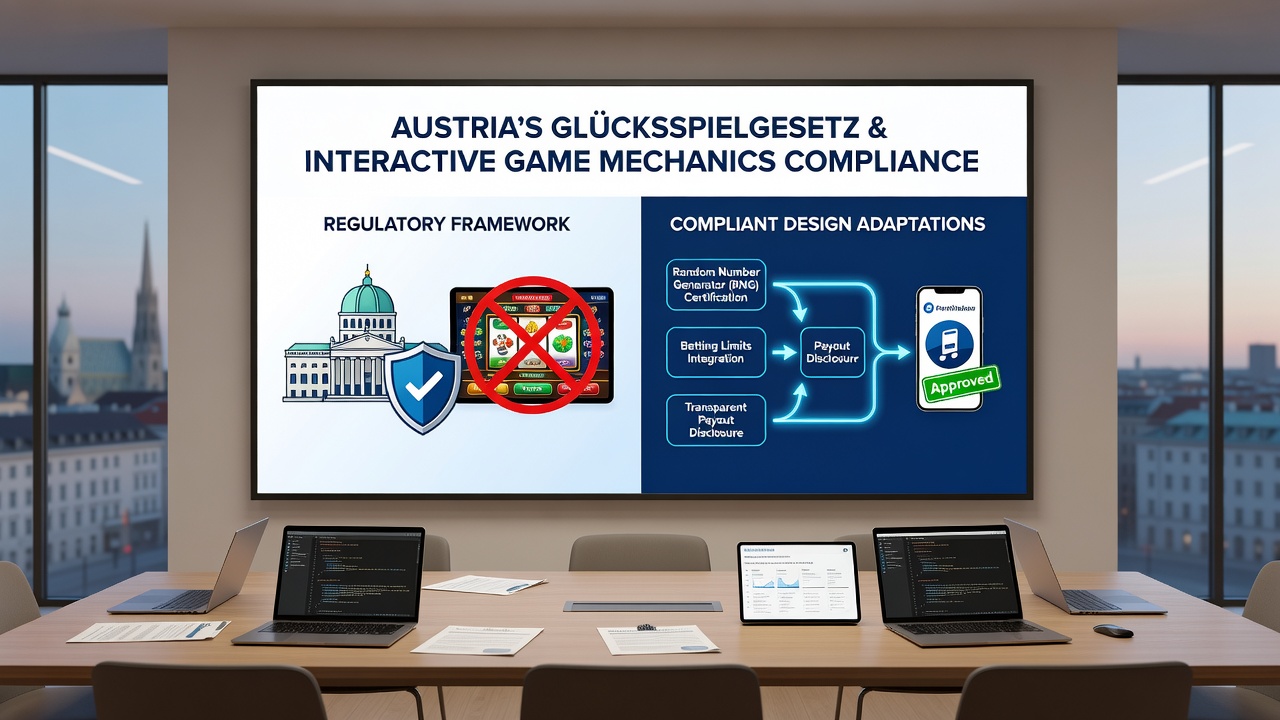
Austria's Glücksspielgesetz establishes the core legal structure for all forms of gambling, and its rules shape how developers build and certify interactive game mechanics in both land-based and digital environments. The law, originally enacted in 1989 and updated multiple times since, requires that every element of chance-based games meets technical and fairness criteria enforced by the Federal Ministry of Finance. Observers note that these requirements cover return-to-player percentages, random number generator integrity, and the overall structure of game progression systems.
Core Elements of the Glücksspielgesetz
Under the Glücksspielgesetz, operators must secure a concession or license before offering any interactive games to Austrian residents, and the statute defines interactive games as those delivered through electronic platforms where player inputs trigger algorithmic outcomes. Data from the ministry shows that concessions cover lotteries, sports betting, and casino-style products, each with distinct mechanical restrictions. For instance, slot-style games must display fixed paytables and cannot incorporate features that adjust probabilities based on player history or wager size.
Researchers at European gaming research centers have documented how the law separates skill-influenced elements from pure chance mechanics, which forces providers to submit detailed technical documentation during certification. The process involves third-party testing laboratories that verify every reel strip, bonus trigger, and progressive jackpot formula against predefined randomness thresholds. Those who've examined compliance reports find that even minor changes to bonus round frequency demand fresh approvals.
Mechanics Compliance Requirements
Interactive game developers must ensure that all mechanics operate within parameters set by the Glücksspielgesetz, including maximum stake limits per spin and mandatory disclosure of theoretical payout percentages. Certification bodies examine source code for hidden variables that could alter outcomes, while operators publish verified return-to-player figures on their platforms. Figures reveal that Austrian-licensed sites display these percentages prominently, and regulators conduct periodic audits to confirm ongoing adherence.
One study conducted across multiple European jurisdictions revealed that Austria's approach emphasizes pre-launch testing more rigorously than many neighboring systems, particularly for games featuring cascading reels or multiplier systems. Developers must demonstrate that each mechanic functions identically across all player sessions, without adaptive difficulty or personalized outcome weighting. This rule extends to live dealer interfaces and hybrid products that blend video game elements with traditional gambling formats.
Developments Scheduled for August 2026
Regulatory updates taking effect in August 2026 introduce expanded requirements for real-time monitoring of game mechanics, and licensed operators will need to integrate continuous logging systems that report any deviation from certified parameters. The ministry has indicated that these logs will feed into an automated oversight platform designed to flag statistical anomalies faster than manual reviews allow. Providers of interactive titles will face new documentation standards for games that include player-choice elements, such as decision-based bonus rounds, to prove that choices do not mask underlying probability shifts.
Industry associations across the EU have begun preparing guidance documents that translate these upcoming rules into practical development workflows. Data indicates that companies already operating under Austrian concessions have started internal audits of existing titles to identify any mechanics that might require redesign before the deadline. The changes also address cross-border play, requiring clearer geographic restrictions and IP verification layers that interact directly with game servers.
Impact on Game Design Practices
Game studios targeting the Austrian market have adjusted their design pipelines to accommodate the law's constraints on variable mechanics. Teams now build separate versions of bonus features for different regulatory environments, while core random number generators remain standardized across all deployments. Observers note that this separation increases development costs but reduces the risk of license revocation during post-launch inspections.
According to reports from the Austrian Federal Ministry of Finance, several popular titles underwent mechanics revisions in recent years to meet updated fairness criteria. These revisions often involved removing progressive elements that scaled with player volume or eliminating features that rewarded consecutive losses with increased payout chances. Developers working with Austrian partners report that early involvement of compliance specialists during the concept phase prevents costly rework later in the process.
Conclusion
Austria's Glücksspielgesetz continues to set technical boundaries for interactive game mechanics, and upcoming changes in August 2026 will further tighten monitoring and documentation standards. Operators and developers must maintain certified systems that deliver consistent, verifiable outcomes while satisfying transparency obligations. The framework has produced a structured environment where regulatory approval and game innovation intersect through defined testing protocols and ongoing oversight mechanisms.